

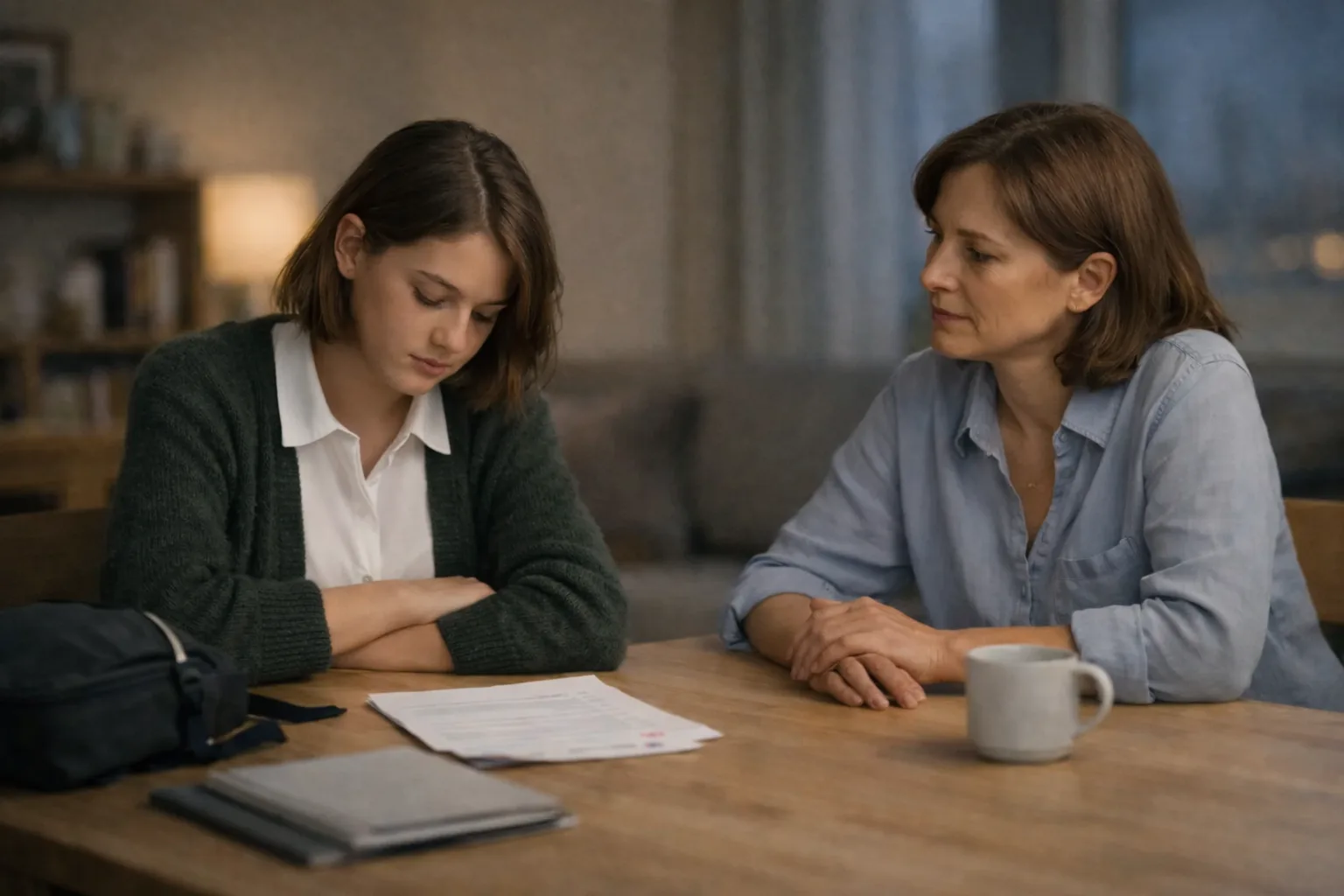
A poor mark can disappoint. It should never become a scene, a label or a relational weapon. When a child fears the reaction at home, in the family chat, among friends, or in class more than the assessment itself, the issue is no longer only academic. It is about safety, dignity and trust.
The key point is simple: a mark can judge a piece of work, but it must not be used to judge a child's worth. Once marks are used to expose, compare, ridicule, threaten or withdraw affection, the logic has shifted into humiliation.
When a mark stops being feedback and starts becoming humiliation
Not every negative reaction to a poor mark counts as humiliation. A parent can be worried or disappointed. A teacher can point to a real problem with method, effort or understanding. The line is crossed when the mark stops being information about a piece of work and becomes a verdict on the child.
You are moving towards humiliation when the mark is used to:
- put a child down in front of other people;
- compare them with siblings, cousins or 'the children who cope properly';
- make them feel they are an embarrassment;
- force them to show results to relatives, family friends or a group chat they did not choose;
- keep a running joke going about how 'thick', 'lazy' or 'hopeless' they are;
- circulate their results in a class chat, online group or social media feed.
This distinction often helps:
| A demanding academic response | Humiliation |
|---|---|
| The discussion stays focused on the work, the method and the time spent. | The discussion attacks the child's worth, intelligence or place in the group. |
| The conversation stays private and proportionate. | The result is exposed, commented on or mocked in front of other people. |
| The adult is trying to understand what would help. | The adult is mainly trying to provoke shame or instant obedience. |
| The mark opens a reflection. | The mark becomes proof that the child is 'useless', 'lazy' or 'a disappointment'. |
On the social side, even one humiliating episode can matter. But when mockery around marks becomes repeated, deliberate and bound up with a power imbalance, you are moving towards bullying. That distinction matters, because it changes how seriously school should treat the situation.
In families, the confusion often comes from a good intention that has been badly translated: 'I just want it to sink in.' But the child may hear something else: my place in this family depends on my results. From that point, fear stops correcting and starts disorganising. If humiliation is repeated at home, this is no longer just a clumsy way of motivating. It can become a form of emotional abuse.
By secondary school, sixth form and the start of higher education, the humiliation may look less obvious. It can pass through irony, rank-ordering friends by results, sharing screenshots, or a sudden silence around studies that makes one young person feel permanently below the others.
A useful rule of thumb is this: if your child is more afraid of other people's reactions than of the mark itself, treat the situation as a protection issue, not only a performance issue.
The quiet signs adults often miss

Humiliation around marks rarely announces itself with a clear sentence. Many children do not say, 'I am being humiliated.' They change their behaviour instead.
The quieter warning signs include:
- hiding marked work, planners or phones, or deleting messages quickly;
- becoming unusually tense before test papers are handed back, parents' evening, report day, or family meals where results are discussed;
- repeatedly asking you not to talk about marks in front of other people;
- saying things such as 'I'm thick', 'I'm the embarrassing one' or 'they're right about me';
- reacting with sudden anger whenever school comes up;
- more stomach aches, headaches, nausea, poor sleep or exhaustion;
- avoiding certain friends, group chats, lessons or social media posts;
- sometimes working harder while results still dip because they no longer dare ask for help, or becoming snappy at home and then strangely flat.
Taken one by one, these signs do not prove grade-related humiliation. Taken together, they often show that a child no longer feels relationally safe around school results.
Another important clue is a change in self-description. When a young person starts talking about themselves as 'a burden', 'a shame' or 'a hopeless case', they may be absorbing the humiliating gaze of other people and turning it inward.
Be wary, too, of what adults dismiss too quickly as banter: reading out a mark 'for a laugh', screenshots moving around a group chat, improvised rankings, nicknames built around being bad at school. Humiliation often hides inside ambiguous formats because ambiguity makes it easier for adults to minimise later.
Why this damages more than school performance
When a child is humiliated around marks, the damage is not limited to the sadness of the moment. School assessment becomes a social threat. And children do not learn well under permanent threat.
Academically, they may lose attention, confidence, engagement and willingness to try. They stop asking questions, handing in imperfect drafts or taking the ordinary risks that learning requires. Some begin to avoid tests, homework or contact with teachers. Others move into cheating, lying or defensive perfectionism, not because they are trying to grow, but because they are trying not to be exposed.
Emotionally, repeated shame wears children down quickly. It can feed anxiety, low mood, irritability, inferiority and loss of confidence. Some young people shut down almost completely. Others become sharply angry. Aggression can be a defence against humiliation, especially when a child feels trapped and publicly reduced.
Relationally, the damage can last even longer. The adult who should protect becomes a judge or an audience. Classmates become a danger. Home stops feeling like a place to recover, and school stops feeling like a place to learn.
There is also a cascade effect. A pupil who has been humiliated may start working less, not because they no longer care, but because every mistake now costs too much psychologically. Results then fall further, which creates the conditions for more humiliation. In some families, the marks do not collapse immediately. The price may show up instead as exhaustion, secrecy, panic or perfectionism.
At home, harsh phrases are not minor details. Sentences such as 'You're embarrassing us', 'Your brother manages it' or 'What is wrong with you?' can sink in more deeply than a one-off punishment. The adult may believe they are adding pressure. The child may hear that they are losing value.
The right sequence of action for parents

In this kind of situation, the first priority is not study technique. The first priority is to reduce exposure to shame. Only then does it make sense to return to schoolwork.
1. Stop the humiliating scenes immediately
Start by closing the most obvious taps:
- no reading out results in front of other people;
- no comparisons with siblings or 'the ones who always manage';
- no ironic remarks at dinner, in the car, in the wider family or in group chats;
- no forwarding report pages, marked papers or screenshots without the young person's agreement.
If part of the humiliation is coming from home, name that quickly. The first protective move is to stop doing what is hurting the child.
2. Open a conversation that does not feel like an interrogation
Avoid openings such as 'What have you done now?' A lower-pressure sentence works better: 'I get the sense that marks feel frightening for reasons bigger than school itself. I want to understand what feels heavy, not catch you out.'
Then hold a simple line: believe before you challenge, listen before you solve, and make it explicit that no one should have to be humiliated in order to learn.
3. Work out where the humiliation is really happening
Ask yourself where the problem mainly plays out: at home, in a friendship group, in class, on a group chat, online, with an adult in school, or in several places at once.
An awkward one-off remark is not handled in the same way as a repeated campaign in a class group chat. Humiliation at school combined with pressure at home calls for a double correction, not a single conversation.
4. Keep records without turning your child into an investigator
If there are messages, screenshots or written comments, keep them. If there are repeated incidents, make short dated notes of what happened, who was involved, where it happened and what the impact was on concentration, attendance, safety or willingness to go to school.
The goal is not to build an obsessive dossier. It is to avoid the situation later being minimised because nobody kept clear facts.
5. Contact the school with a clear aim
When the humiliation comes from peers, a group chat, an adult, or spills into school life, make contact. The useful message is not: 'My child is too sensitive.' It is: 'There are specific incidents affecting safety, learning and participation.'
In primary school, the class teacher is often the practical first route. In secondary school, that may be the form tutor, head of year or another pastoral contact. If safety is involved, ask who is coordinating the response and who your named contact is.
Ask for something concrete: a trusted adult for your child, a factual account of what has been observed, immediate protective steps, and a follow-up point rather than a vague promise to 'keep an eye on it'. If your concern involves a member of staff, keep the tone factual and, where possible, in writing.
6. Delay the big lectures about work
While a child is still on alert, long speeches about revision methods, future options or 'waking up' rarely help. Start by restoring some basic safety. Then return to schoolwork in a much narrower way: one subject, one chapter, one missing explanation, one targeted support need.
7. Avoid the responses that make things worse
Some parental reactions reliably worsen the situation:
- 'Ignore them, it'll pass.'
- 'You should just have worked harder.'
- 'You need to toughen up.'
- rushing to confront other parents or pupils before you have clarity;
- forcing an immediate face-to-face confrontation;
- making support conditional on rapid grade improvement.
What the child often hears is this: they must first deserve protection.
How to rebuild safety and trust over time
Once the urgent phase has passed, the real work begins: stopping marks from turning back into instruments of threat.
The rules that help most often are these:
- Make school results private. Marks should be discussed between the people concerned, not in front of an audience.
- Separate worth from result. You can still be demanding, corrective and structured. But a failed test is not a diagnosis of the child's value.
- Replace comparison with progression. The right question is not 'who did better?' but 'what was blocking things, and what is the next realistic step?'.
- Repair explicitly if an adult has humiliated. A real repair sounds something like this: 'I exposed you when I should have helped. That was not fair. I'm changing how I handle this.'
- Create experiences of competence again. Confidence often returns through one piece of work prepared differently, one question asked in class, one small success that is not immediately judged.
- Stabilise one reliable adult. A parent, tutor, form tutor, pastoral lead, relative or counsellor-like figure: the child needs to know who they can go to without being immediately judged.
The goal is not to pretend marks do not matter. They do matter. But they must go back to being what they are meant to be: a partial indicator, never a licence to humiliate.
When to ask for help sooner
You should speed up the response if you notice any of the following:
- your child repeatedly refuses school or specific lessons;
- they talk about disappearing, dying, hurting themselves, or start taking serious risks;
- sleep, appetite, mood or physical state deteriorate clearly;
- they withdraw sharply or cut off friendships;
- the humiliation comes from an adult and is repeated;
- the situation continues online in the evenings or at night, or affects several spaces at once.
In those situations, do not rely on a purely domestic strategy. Work with the school, and seek health or psychological support early.
In the UK, if you are worried about self-harm or a mental health crisis, speak to your GP or use your local NHS urgent mental health help route. If there is immediate danger or a medical emergency, call 999 or go to A&E.
What to keep in mind
When grades become a source of family or social humiliation, the issue is no longer only school attainment. The issue becomes protecting a child from a form of shame that disrupts learning, wears down confidence and weakens trust.
The right compass is usually the same: name the situation, stop the exposure, coordinate the useful adults, and only then return to schoolwork. A mark may call for an adjustment. It must never be used to measure a child's dignity.
Sources
Keep reading
Related reading
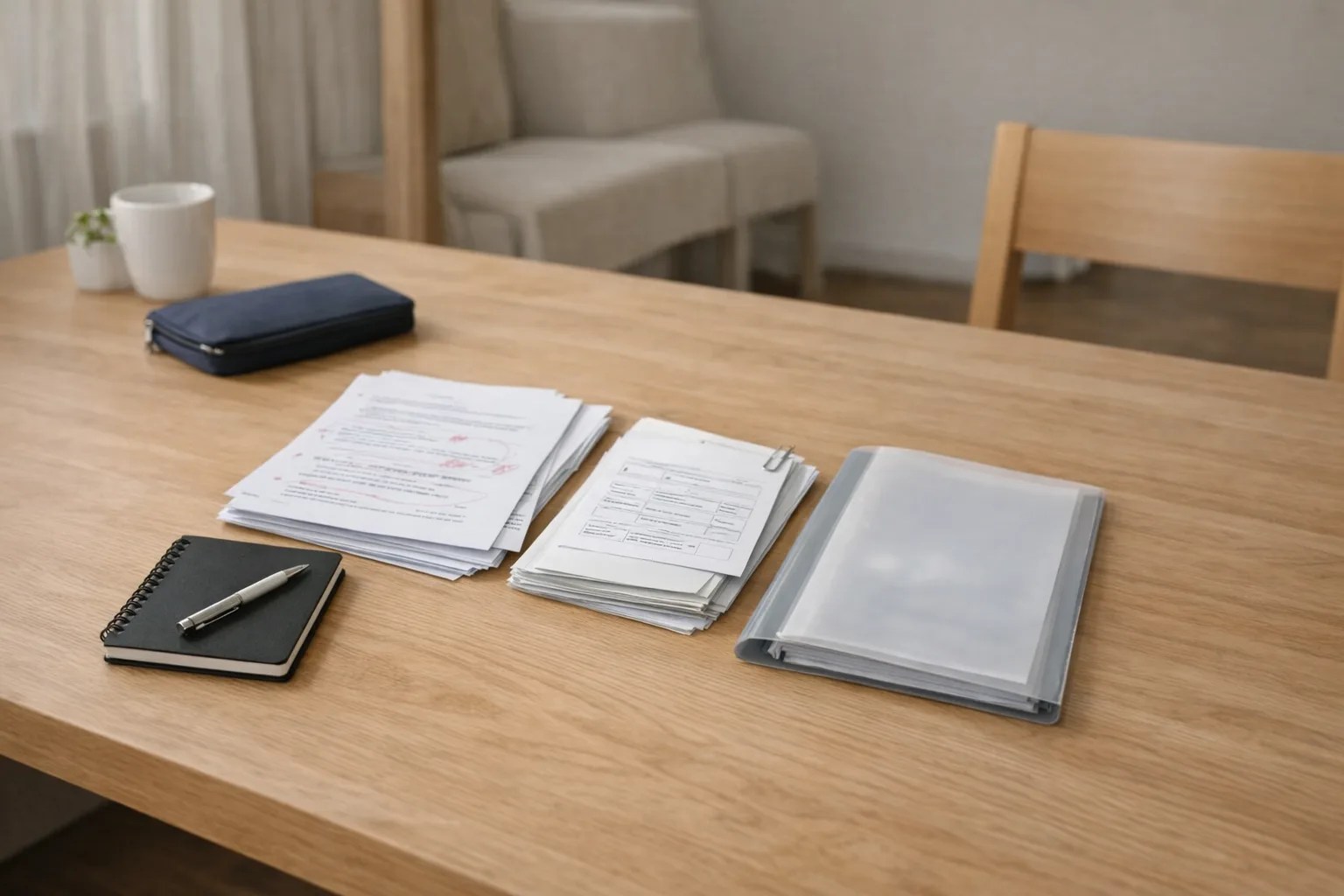
What evidence should you gather before asking for support or adjustments at school?
Before you ask a school for extra support or adjustments, collect fewer documents but better ones: dated pieces of work, brief notes on repeated patterns, the practical impact on school tasks, and the help already tried.
What to keep in writing when you may need school support.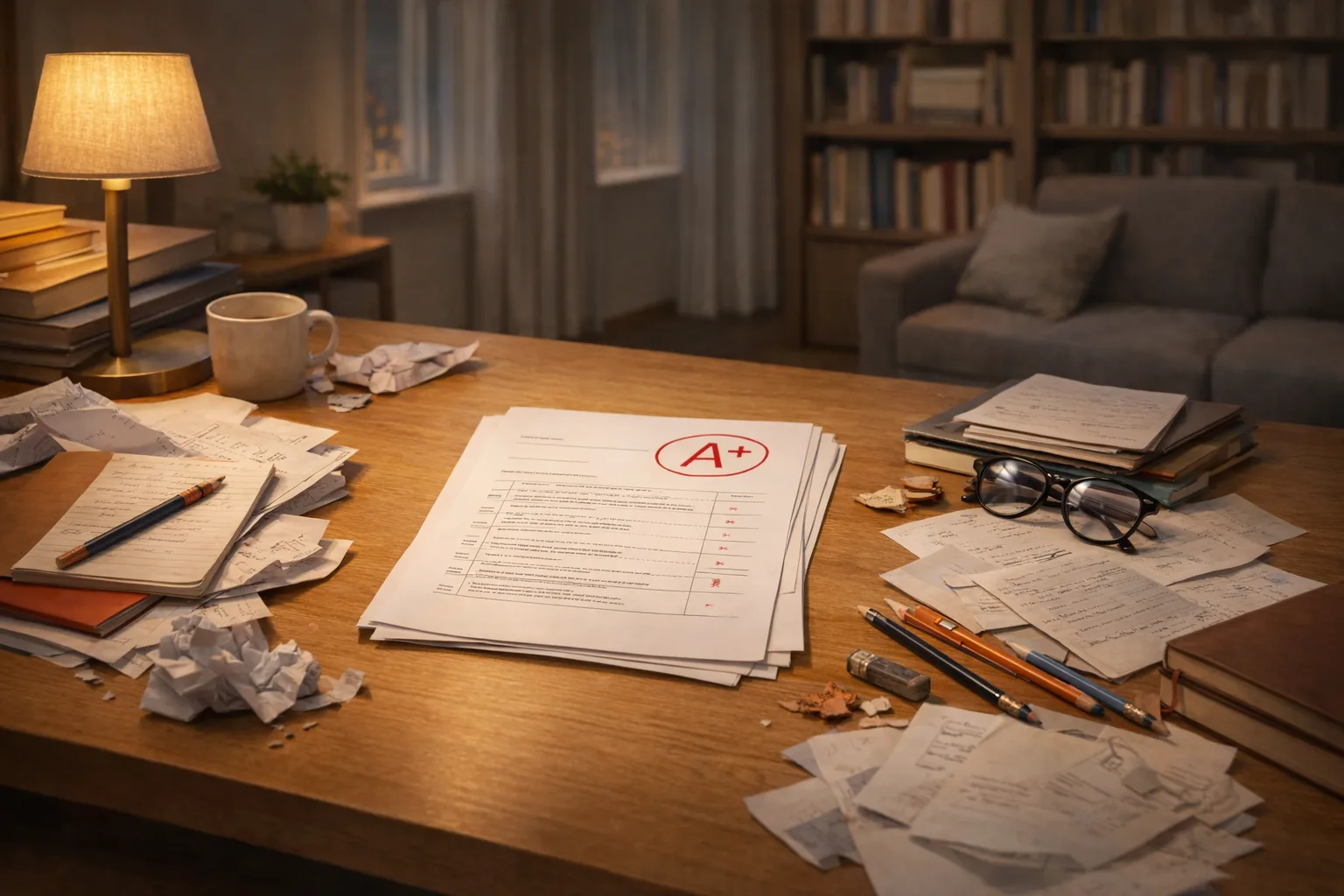
Good grades, but at too high a cost: should you still ask for help?
Good grades do not prove that everything is fine. If a child is coping only through endless evenings, exhaustion, tears or constant parental steering, it can make sense to ask for help before the grades fall.
See what to do when results look acceptable but the emotional cost is too high.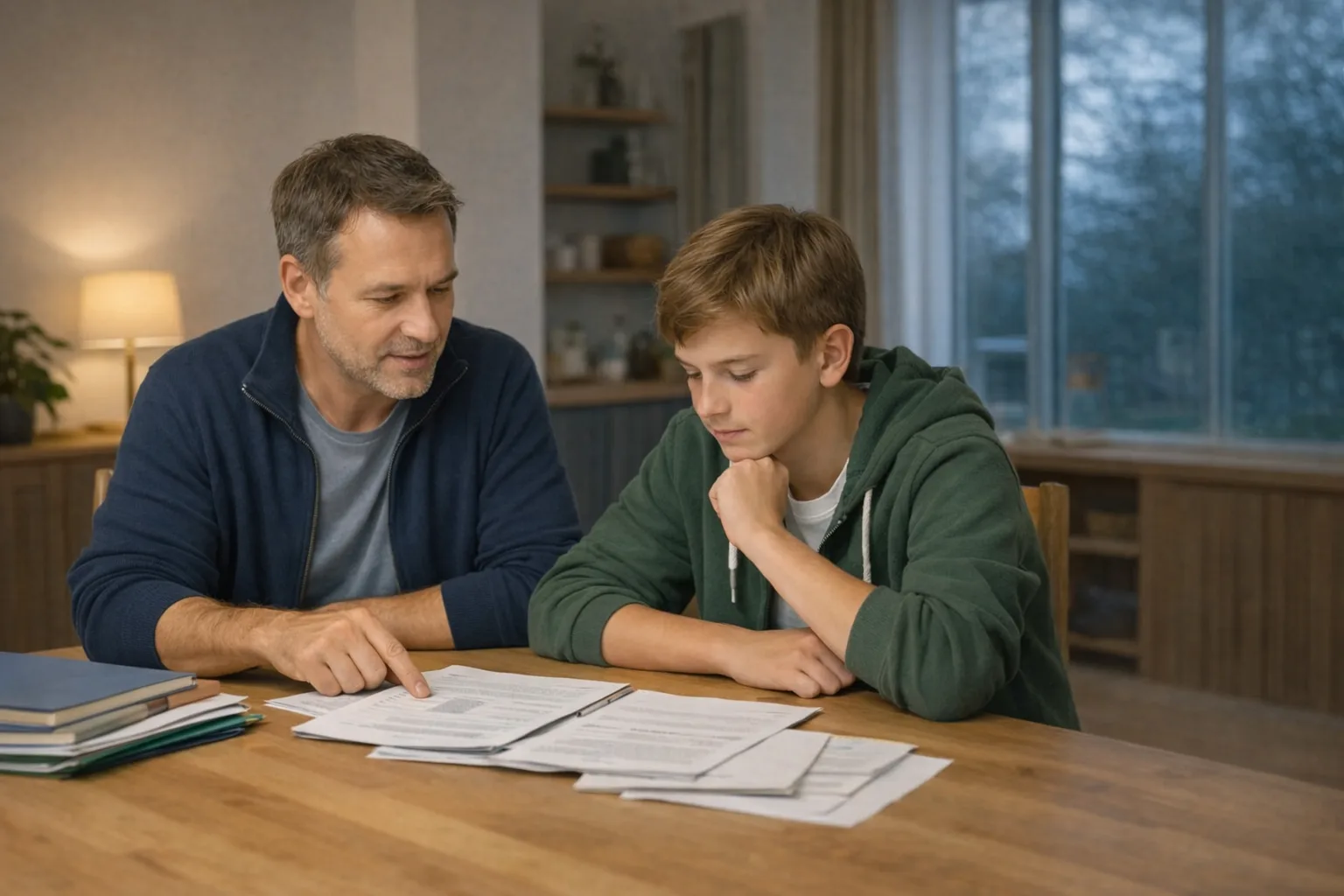
Does my child need school adjustments, or mainly a different way of studying?
Concrete guidance for telling the difference between temporary overload, a study-method problem and a more durable difficulty, then deciding whether to observe, speak to school, seek a specialist assessment or ask for adjustments.
Work out whether the issue points to study method, overload or a need for school adjustments.