
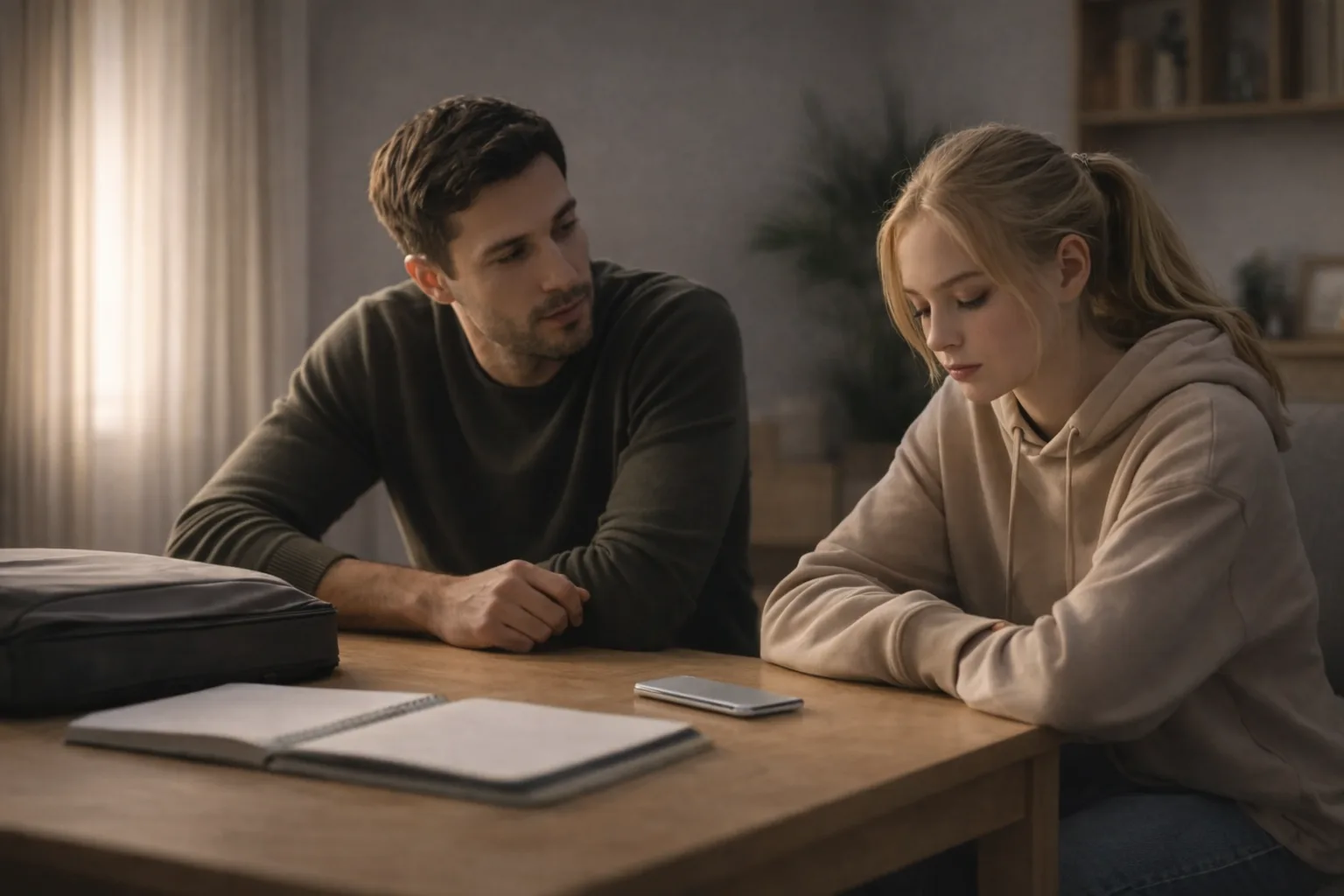
Bullying, anxiety and school climate: the protective frame
When a child starts dreading school, parents often feel forced to choose too quickly between two explanations: “this is bullying” or “this is anxiety”. In real life, the safer starting point is broader: what pattern is making school feel emotionally unsafe, and what needs to change so the child can learn again?
Bullying, cyberbullying, school anxiety and a damaged class climate can overlap. A child may feel anxious because they are being targeted. Another may be anxious because the room is unpredictable, noisy or humiliating even without one clear aggressor. A third may be caught in perfectionism, social fear or shame after a public mistake. The label matters, but the first response matters more: listen carefully, reduce exposure to further harm, document what is happening, involve the right adults, and rebuild a sense of safety before expecting normal school performance to return.
A useful protective frame has four steps:
- Name the pattern without rushing the diagnosis. Look for repetition, imbalance of power, humiliation, exclusion, threats, digital spillover and the child’s loss of freedom at school.
- Protect before investigating. A child who feels exposed needs calm adult cover, not pressure to “prove” everything immediately.
- Work with the school around concrete facts. Vague concern is easy to minimize; dates, places, screenshots, witnesses and changes in behaviour are harder to ignore.
- Rebuild confidence and capacity after the incident. Safety is not restored the moment an adult says “it has been handled”. The child may still need help returning to class, sleeping, concentrating and trusting peers again.
This page is a practical guide for families. It is not a substitute for local safeguarding rules, mental-health care, legal advice or emergency support. If there is immediate danger, self-harm risk, serious threats, sexual exploitation, or a child says they cannot stay safe, seek urgent help through your local emergency, crisis or child-protection routes.
Recognise weak signals before they become a crisis
Children rarely present bullying or school anxiety as a neat report. Many protect their parents from worry, fear retaliation, feel ashamed, or believe adults will make it worse. The first signs are often indirect: stomach aches on school mornings, Sunday-night tears, sudden irritability, missing belongings, a drop in participation, avoidance of certain corridors, reluctance to open messages, or a child who becomes unusually quiet after checking a phone.
The key is to look for change plus pattern. One bad day can happen in any school life. A repeated change in sleep, appetite, mood, friendships, attendance or schoolwork deserves attention, especially when the child seems frightened of a particular person, group, place, platform or time of day.
| What you may see | What it can mean | What helps first |
|---|---|---|
| A child says “nothing happened” but becomes tense before school | They may not have words yet, or may fear consequences | Ask for small details: “Which part of the day feels hardest?” |
| Lost items, damaged objects, unexplained money requests | Possible intimidation, theft, coercion or avoidance | Record what changed and ask the school about specific times and places |
| Sudden withdrawal from friends or group chats | Exclusion, humiliation, conflict, or social anxiety | Separate friendship conflict from repeated targeting |
| Falling grades or unfinished work | Concentration may be disrupted by fear, sleep loss or shame | Do not treat the grades as the main problem until safety is clearer |
| Phone checking late at night, panic after notifications | Cyberbullying, pressure, threats or fear of missing evidence | Preserve evidence calmly and reduce night-time exposure |
| Frequent headaches, stomach aches or school refusal | Anxiety, bullying, illness, overload, or a mix | Take symptoms seriously and involve health support when needed |
Bullying, conflict, bad climate or anxiety?
A normal conflict usually involves disagreement between students who have some ability to respond, withdraw or repair. Bullying is more concerning when there is a pattern of intentional harm, repetition, humiliation, exclusion, coercion or a power imbalance. The imbalance can come from popularity, age, group size, physical strength, digital control, access to embarrassing information, or a child’s fear that no adult will help.
A poor school climate is different but still serious. It may not revolve around one bully. It can look like constant mocking, “jokes” that punish difference, public ranking, chaotic transitions, online gossip, or adults dismissing cruelty as normal. In that climate, an anxious child may not be “overreacting”; they may be accurately reading that the environment is unsafe.
School anxiety can also exist without bullying. Some children fear failure, separation, sensory overload, oral participation, tests, social judgment or a teacher’s reaction. That distinction matters because the response changes. Bullying requires protection and accountability. Anxiety often requires gradual support, predictable routines and sometimes professional care. Many children need both.
What bullying and anxiety do to learning
Parents often notice grades before they understand the social problem underneath. That is because fear competes directly with the mental resources a child needs for school: attention, working memory, sleep, curiosity, risk-taking, asking questions and tolerating mistakes. A child who is scanning the room for ridicule has less capacity left for fractions, essays, science vocabulary or a group project.
The domino effect can look like this:
- Sleep becomes fragmented. Night messages, rumination and dread make mornings harder.
- Participation shrinks. The child avoids raising a hand, changing groups, using the locker area, eating in public or walking a certain route.
- Work becomes defensive. They do enough to avoid attention, but not enough to engage deeply.
- Confidence narrows. “I am bad at school” can replace the more accurate “I am trying to learn in an unsafe climate.”
- Family evenings become tense. Parents push for homework; the child hears another demand in a day already defined by pressure.
- Absence becomes tempting. Staying home can feel like the only reliable escape, even when it creates new academic stress.
This is why a purely academic response is too small. Extra worksheets do not solve humiliation. More discipline at home does not solve fear in a corridor or group chat. Once safety is in question, schoolwork improves best when adults reduce the threat, restore predictability and give the child a manageable path back into learning.
Four common profiles parents miss
Some children become visibly distressed. Others do not. These profiles are not diagnoses, but they help families notice quieter patterns.
The high-performing child who collapses at home. They keep grades stable at school, then cry, rage or shut down after hours. Adults may underestimate the problem because performance hides the cost.
The “difficult” child who is actually cornered. Irritability, refusal and sarcasm can be defensive reactions when a child feels adults have not protected them.
The socially connected child who is still targeted. A child can have friends and still be humiliated by one group, excluded from one chat, or trapped by one repeated threat.
The child who says they do not care. Detachment can be a shield. Watch what they avoid, not only what they say.
What to do in the first 48 hours if you suspect bullying
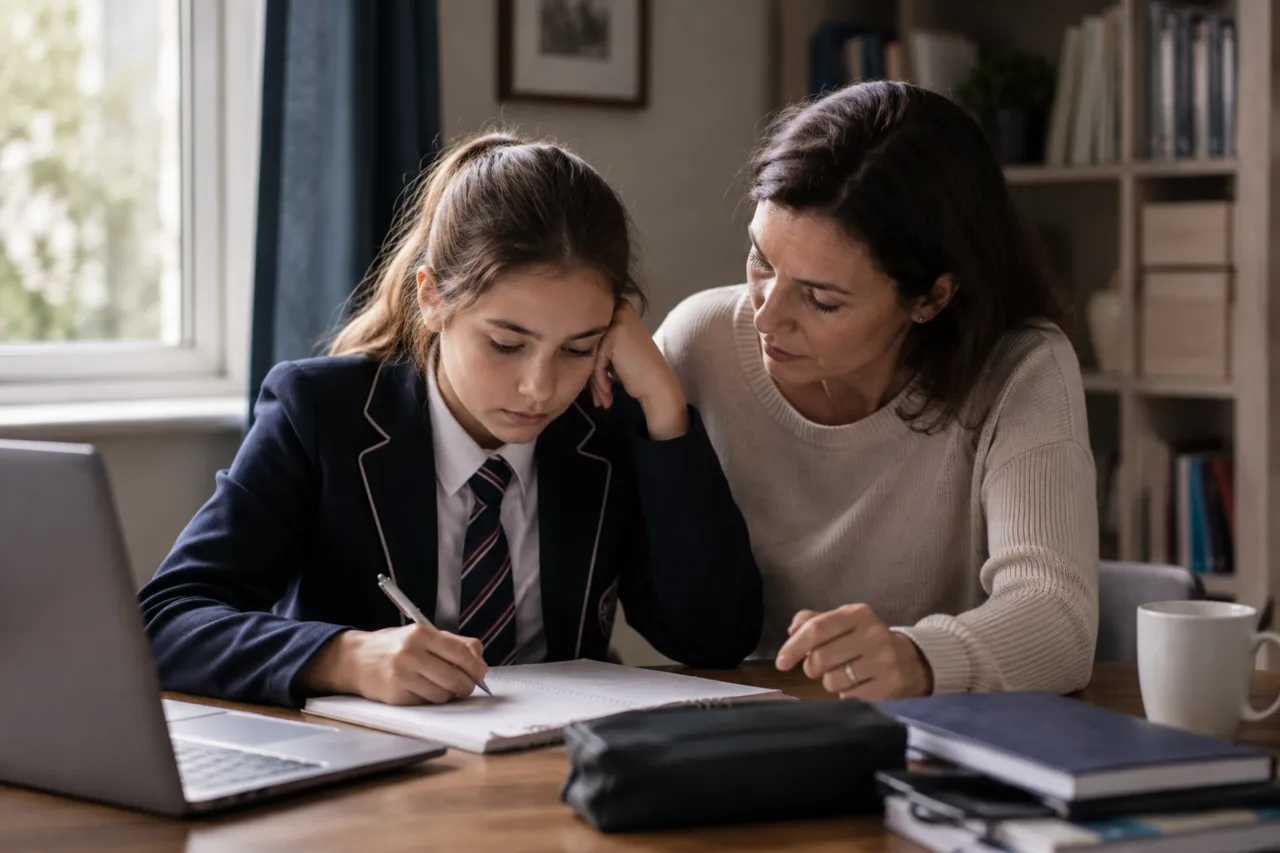
The first two days are not about solving everything. They are about preventing escalation, preserving facts and showing the child that adults can act without making them more exposed.
1. Listen without cross-examining
Start with safety and trust: “I believe that something feels wrong. You do not have to prove everything tonight. We will handle this carefully.” Avoid demanding a perfect chronology immediately. Stress can scramble memory, and children may reveal details in layers.
Useful questions are concrete but gentle:
- “When did you first notice this changing?”
- “Who is usually there?”
- “Where does it happen most?”
- “What are you afraid would happen if adults intervened?”
- “Is there anything online that we should save before it disappears?”
- “Do you feel safe going to school tomorrow?”
2. Write a factual log
Create a simple record: date, time, place, people involved, exact words if known, screenshots, witnesses, physical signs, changed behaviour and who was informed. Keep the tone factual. A clear log helps adults distinguish isolated incidents from a pattern and reduces the burden on the child to retell painful events repeatedly.
For cyberbullying, save screenshots with dates, usernames and surrounding context where possible. Do not encourage the child to provoke more messages to gather evidence. Do not forward humiliating images or messages widely; share them only with the adults or services who need them to protect the child.
3. Lower immediate exposure
Depending on the situation, this may mean changing the route to school, arranging an adult check-in, pausing unsupervised group chat access at night, keeping the phone out of the bedroom, or asking the school to supervise a vulnerable place. The goal is not to punish the child by cutting them off from friends. The goal is to reduce the channels through which harm reaches them while adults intervene.
4. Contact the school with specifics
A first message to school should be calm, concrete and hard to dismiss. State that you are concerned about a pattern affecting safety and learning. Include dates or examples, name urgent risks, ask who will coordinate the response, and request a follow-up time. If the child fears retaliation, say so explicitly and ask how the school will avoid exposing them.
A useful formulation is: “We are not asking you to punish based on rumour. We are asking for a careful safeguarding and school-climate response to a pattern that is now affecting our child’s ability to attend and learn.”
5. Escalate if risk is high or the response is vague
If there are threats, physical harm, discriminatory abuse, sexual images, extortion, self-harm risk, severe panic, or refusal to attend, do not wait for a slow informal process. Use the school’s urgent safeguarding route and, where appropriate, local child-protection, health, police or crisis services. If the school response remains vague, ask for the concern to be recorded, for a named adult to own the follow-up, and for a date when you will review whether the child is safer.
Cyberbullying: when school enters the bedroom
Cyberbullying is not simply “screen drama”. It changes the geography of school life. A child can leave the building and still be followed by messages, screenshots, fake accounts, group exclusions, edited images or threats. The home bedroom, which should be a place of recovery, becomes another part of the school climate.
Online harm also creates a dilemma for parents. Reading everything secretly can damage trust, but ignoring the phone can leave the child alone with the evidence. A balanced approach is to explain the reason for adult involvement: “I am not trying to invade your whole life. I need to help save what proves the pattern and stop the parts that are hurting you.”
Practical steps often include:
- Save evidence before blocking, where safe to do so.
- Record platform names, usernames, dates, times and whether school peers are involved.
- Block or restrict accounts after evidence is preserved.
- Report abusive content through platform tools when appropriate.
- Move the phone out of the bedroom at night during the acute phase.
- Tell the school when online harm involves classmates, school groups, school journeys or learning participation.
- Seek urgent help if there are threats, sexual content, coercion, doxxing, blackmail or signs of self-harm risk.
Do not frame digital protection as “you lost your phone because you told us”. That teaches silence. Frame it as shared protection: the child should not have to be reachable by people who are humiliating or threatening them at midnight.
How to talk with the school without exposing the child further
A good school response is not only a conversation with the accused student. It is a coordinated plan to make the child safer in the real places where the pattern happens: classroom transitions, lunch, transport, sports, toilets, corridors, group work, online class spaces and informal peer groups.
Parents can help by asking for a response at three levels.
The individual level
Who will check in with the child? How can the child ask for help without public embarrassment? Which adult will they go to if something happens again? What should they do if the incident occurs during a lesson, break or journey?
The peer-group level
Who else has seen the pattern? Are bystanders reinforcing it? Does the school need to change seating, grouping, supervision or expectations around “jokes”? Are there students who can safely support the child without being put in a policing role?
The climate level
What routines allow this to continue? Are certain spaces unsupervised? Are adults dismissing repeated humiliation as personality conflict? Does the class need clearer norms around exclusion, rumours, discriminatory language, image sharing or group chats?
The most useful school meetings stay specific. Bring the log. Ask what will happen next, who is responsible, how the child will be protected from retaliation, and how you will know whether things have improved. Avoid turning the meeting into a trial that depends entirely on the child retelling everything in front of multiple adults. Children often need adults to carry the structure so they do not have to carry the whole case.
What not to do too quickly
Do not contact the other child’s family in anger unless the school or a safeguarding professional advises that it is safe and appropriate. Do not post publicly online. Do not ask your child to “stand up to them” if the power imbalance is real. Do not promise secrecy if the child may be unsafe. You can promise care, discretion and involvement in decisions; you cannot promise to keep serious risk hidden.
Rebuilding safety, confidence and the ability to work
After bullying or severe school anxiety, families often expect relief to be immediate once adults intervene. Sometimes it is. Often it is not. The body may stay on alert. The child may still scan faces for ridicule, avoid a subject where humiliation happened, or interpret ordinary laughter as a threat. This does not mean the child is weak; it means the nervous system has learned to protect itself.
Rebuilding has three strands.
Safety first
The child needs visible proof that adults are still paying attention. A named check-in adult, predictable supervision, safe seating, adjusted group work, or a plan for breaks can make more difference than repeated reassurance. “Tell us if it happens again” is less protective than “Here is exactly what you can do, and here is what adults will do next.”
Belonging second
Bullying attacks a child’s place in the group. Recovery often requires one or two safe peer connections, not instant popularity. Encourage low-pressure contact with trustworthy friends, clubs, teams or activities where the child is not defined by the incident. Do not force social exposure as proof of resilience.
Learning third, but not last
Schoolwork matters, but it may need a reset. Agree with teachers which tasks are essential, which can wait, and how the child can re-enter without drowning in backlog. For a period, the goal may be regular attendance, one manageable assignment, or participating safely in one lesson, rather than catching up everything at once.
If anxiety remains intense, sleep is badly affected, panic symptoms appear, the child refuses school repeatedly, or there are signs of depression or self-harm, involve a qualified health or mental-health professional. School support and family care are important, but they should not replace clinical help when distress is severe or persistent.
Frequently asked questions parents ask too late
Should I use the word “bullying” when I contact the school?
Use it when the pattern fits: repeated harm, humiliation, exclusion, threat or power imbalance. If you are not sure, use wording that still requires action: “We are concerned about a repeated pattern affecting safety, attendance and learning.” That prevents the conversation from getting stuck on a label before the facts are reviewed.
What should I document?
Document dates, times, places, names, witnesses, exact words if known, screenshots, damaged belongings, physical symptoms, sleep changes, attendance issues, work changes and every adult contacted. Keep speculation separate from facts. A neutral log is more useful than a dramatic narrative.
Should I take away my child’s phone?
Sometimes a phone needs limits during the acute phase, especially at night. But taking it away as punishment can make the child feel blamed and cut off from supportive friends. Prefer a shared safety plan: save evidence, restrict harmful accounts, pause late-night notifications, and agree when an adult will help review concerning messages.
What if my child begs me not to tell school?
Take the fear seriously. Ask what they think will happen if adults know. Then explain that safety problems cannot rest only on their shoulders. You can involve them in how the school is told, what is shared first, and which adult is approached, while still acting when risk is significant.
How do I know if it is anxiety rather than bullying?
You may not know immediately. Anxiety often shows up as avoidance, physical symptoms and dread; bullying may produce the same signs. Look for triggers: a person, group, place, platform or repeated social situation points toward relational harm. Fear of tests, mistakes, separation or overload may point toward anxiety without bullying. Many children need assessment of both.
When should I seek outside help?
Seek urgent help if there is immediate danger, self-harm talk, threats, sexual coercion, blackmail, serious physical harm or the child says they cannot stay safe. Seek professional support if anxiety, sleep disruption, school refusal, depression signs or panic continue despite school action and family support.
A practical recap for a calmer next step
Bullying, anxiety and school climate problems become more dangerous when adults minimize them, rush them, or make the child carry all the proof. The calmest useful response is not passive. It is structured.
Start by listening for the pattern. Protect the child from further exposure where you can. Record facts. Contact the school with specific concerns and ask for a named follow-up. Treat online harm as part of the school climate when peers are involved. Watch the child’s sleep, mood, attendance and confidence after the first intervention, not only the school’s assurance that the matter has been addressed.
Most of all, remember the order: safety before performance, trust before interrogation, facts before accusation, recovery before pressure. A child who feels protected can begin to learn again. A child who feels alone with the problem often cannot.
Sources
- Bullying: What is it and how to stop it
- Cyberbullying: What is it and how to stop it
- Behind the numbers: ending school violence and bullying
- Proportion of adolescents who experienced bullying during the past 12 months
- Mental health of adolescents
- Warning Signs for Bullying
- Preventing Bullying Through Science, Policy, and Practice
All articles in this category
Every published article in this topic, from newest to oldest.
- Perfectionism at school: when high standards start working against your child
- The subtle signs of bullying parents often spot too late
- When grades become a source of family or social humiliation
- If you think your child is being bullied at school: what to do in the first 48 hours
- Night-time cyberbullying: when school enters the bedroom